The VC’s of Freeman, Hartigan, Gough and Watson at Agra, Rotak and Lucknow
In the advance of Greathed’s Force towards Agra, we have already seen the seven VCs won at Bulandshahr in a matter of three hours; however, there would be more honours for valour to be won. Two would be awarded for Agra, and the other two in separate incidents during the advance on Lucknow when the force was under the command of Hope Grant.
However, we take ourselves back to the Battle of Agra on the 10th of October.
Private John Freeman – 9th Lancers
Born in Barming, near Maidstone, Kent in 1833, John Freeman started life as a labourer’s son and his aspirations until the age of 24 were those of his father. However, in that year, he enlisted in the 9th Lancers, exchanging the hoe for the lance, so to speak and sailed off for service in India. He would find himself thrown before long, into the Indian Mutiny. His career with the Lancers, however, would be brief.
Before any leadership could be organised, the Battle of Agra was fought in separate quarters, with individual battles proceeding in the field. Here, the cavalry was giving chase and charging; there, the infantry was engaged in hand-to-hand combat, and the artillery put to with their guns. For a moment, no one was in charge, but everyone was ready to fight.
“The alarm sounded, but there was scarcely need for it. The soldiers of Delhi, accustomed to sudden attacks, turned out with all possible speed. But though they used every despatch, before they were ready, the rebel cavalry, springing from no one knew where, appeared as if by magic on the scene. They had charged the still motionless artillery and had sabred the gunners of one gun when a squadron of the 9th Lancers, which had formed up very rapidly, dashed on them and drove them back in disorder.” (Malleson)
The charge, though splendid, cost the 9th Lancers dearly – Lieutenant French was killed and Lieutenant Alfred Stowell Jones, VC, dangerously wounded. Jones had made his mark at Badli-ki-Serai with another man of the same regiment, Henry Hartigan.
Amid the smoke and noise, the clatter of hooves and the shouts of men, Private Freeman saw that Jones was in a terrible spot. Freeman reined up and dashed towards the injured man, who had been left for dead on the battlefield. The rebels were in no two minds about what they would do to Jones as they continued to hack at the man with their swords – Freeman placed himself squarely between the sowars and his lieutenant – he slew their leader and saved Lieutenant Jones who had received no fewer than twenty-two wounds, a bullet wound through his bridle arm, part of his head was cut away, and one eye destroyed. Yet, by some miracle, Jones recovered.
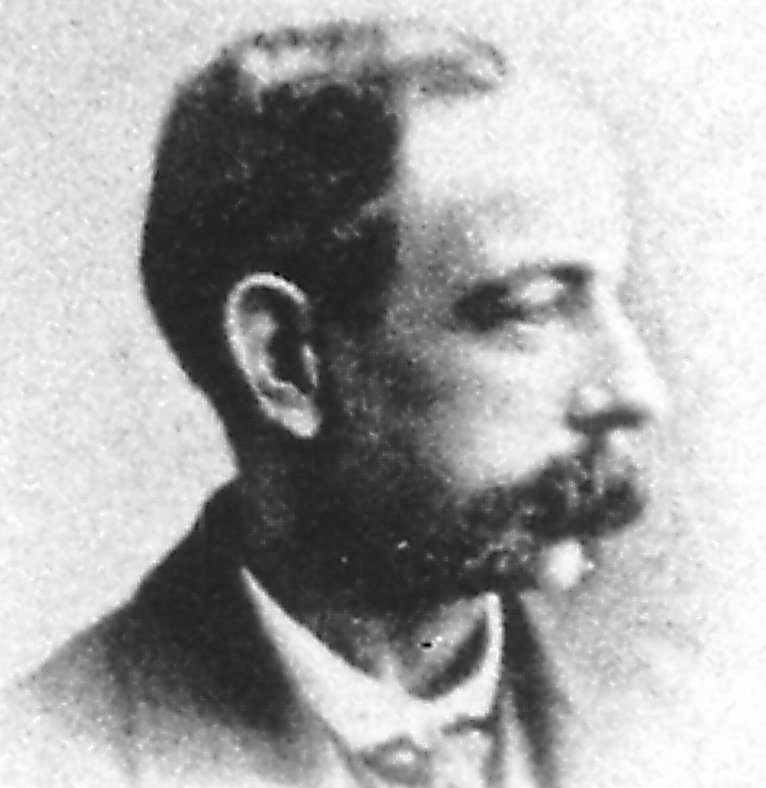
Freeman would continue the march but his career would end at the Battle of Bareilly in May 1858, when, as the only British casualty of the engagement, he was dangerously wounded. His injuries were so severe, that he was invalided, at the age of 25. He received his medal from Queen Victoria, at Windsor Castle, on the 4th of January, 1860.
His injuries did not deter him from living a very long life – Private John Freeman died, aged 80 at his home on 17 Holcroft Road, South Hackney, London on the 1st of July 1913. His medal now forms part of Lord Ashcroft’s collection.
Sergeant Henry Hartigan, 9th Lancers
“The greatest tribute paid to the 9th was the title ‘The Delhi Spearmen’ bestowed on them by the mutineers who had reason to fear those terrible horsemen who were described by a comrade in arms as ‘the beau ideal of how all the British Cavalry ought to be in Oriental countries‘. For their services in the Mutiny, the 9th received the honours ‘Delhi 1857’ and ‘Lucknow’.“
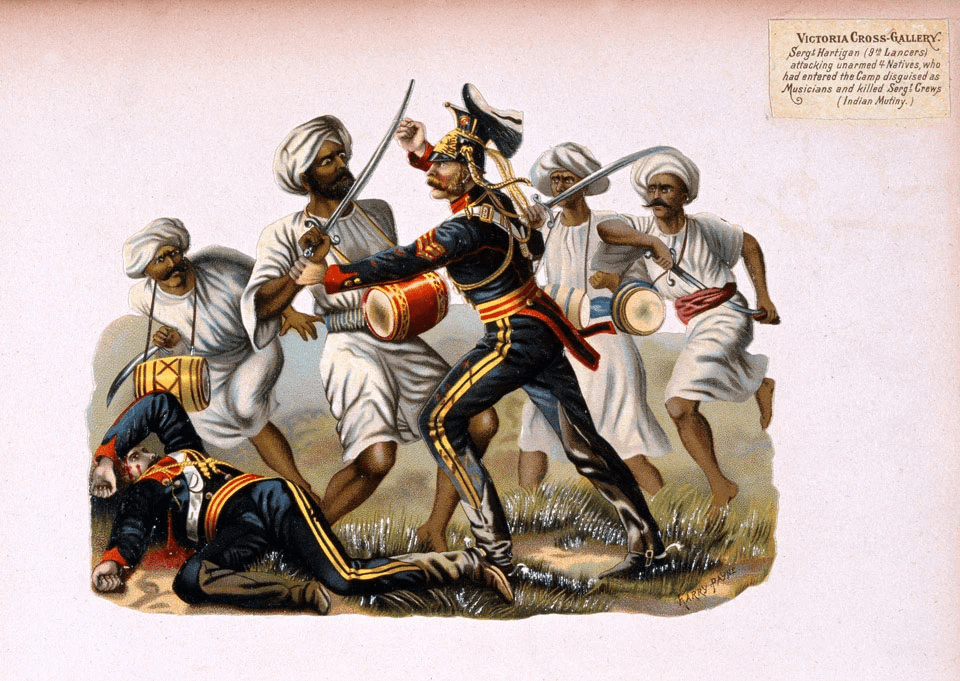
We have already met Sergeant Henry Hartigan once before, on the field of Badli-ki-Serai. By now, he has seen fighting in front of Delhi and has made his way, with the 9th Lancers, to Agra, where the commencement of the battle on 10 October would have much to do with our sergeant.
On the 10th October, 1857, at Agra, in having run unarmed to the assistance of Serjeant Crews
who was attacked by four rebels. Hartigan caught a tulwar, from one of them with his. right hand, and with the other hit him on the mouth, disarmed him, and then defended himself against the other three, killing one and wounding two, when he was himself disabled from further service and dangerous wounds.” (War-Office, 19th June, 1860, London Gazette, pp2316)
We have a spirited telling of affairs from Hartigan himself.
“Well, sir, the camp was hardly pitched when four mutineers, disguised as tom-tom-wallahs, came strolling along the front of our camp. They had passed four and were at the head of the fifth troop when Sergeant Crews detected what he thought a sword-hilt peeping out from under a fellow’s chudder. Crews went up to him, lifted the cloth, and there sure enough was a tulwar! In the twinkling of an eye, all four drew and made at poor Crews! I was standing about 12 yards off, waiting for the bhistee coming round, and without thinking about being unarmed, I sprang to Crews’ assistance, who by this time was in the midst of them. I caught the first man I could come at; hit him such a ‘ dowse’ in the mouth as must have made him fancy a horse kicked him; wrenched the tulwar out of his hand and defended myself from the ferocious attacks of the other three, killing one and wounding two. The fellow whom I had disarmed, thinking discretion the better part of valour, was showing a leg to escape, but as he was jumping over a tent rope, Corporal Stanley gave him ‘one for his nob,’ and we scored the four of them!
But I did not get off scot-free. These vagabonds took a slice clean off my forehead and left a hole about the size of the palm of your hand (not a bit larger) in my Irish head! No end of bones have come out since, and show me the man who will say after that, that 1 had nothing in my head! That’s not all, sir; I was scored, sir, like a spare rib of pork all over the arms. The blows were aimed at my head, but I warded them off with my arms until I got hold of the hilt of the fellow’s sword and then—I made tracks! Well, sir, after this, the guns of the enemy, concealed in some corn fields, opened fire and raked the camp. heir cavalry rushed on to our guns, and all was confusion. Our men turned out as they were—some in shirt sleeves, some mounted without saddles. Led by Captain French and Lieutenant Jones, they charged the enemy, retook the guns, and kept them at bay until our men could come properly into action. Poor French was killed, and Jones got dreadfully mangled, receiving no less than twenty-one wounds.
I did not share, as you may suppose, in the remainder of that day’s fight, which was a most brilliant affair; I was sent to hospital to have my wounds dressed. Poor Helstone! he was the first to come to me, tore the puggree off his cap, converted it into a bandage for my bleeding head, got a dooly and packed me off.
We had proceeded no further than the ball alley when there was a rush, owing to some of the enemy’s cavalry making their appearance. Down went the dooly, and away, of course, went the bearers! I scrambled out the best way I could, arming myself with a pistol which Helstone had fortunately left with me, and Jack sepoy’s tulwar, There was, luckily for me, a gap in a wall close by the spot where the dooly bearers had thought proper to deposit me, and I made my way through, and was joined by two wounded infantry men who had also been abandoned by their dooly bearers. We three unfortunates expected to be attacked, and two of us unarmed! I handed the pistol to one—kept the tulwar myself, and the other man armed himself with brick-bats—and there we stood prepared to defend the ‘imminent deadly breach.’
However, the enemy passed us, and one of the poor fellows who had kept up bravely when there was danger, as soon as it and the excitement had passed, dropped the pistol, quietly lay down, and before assistance could be called, died. I saw him put in a dooly and sent away, and finding myself getting weak from loss of blood, I made the best of my way to the fort. I met the 3rd Kuropeans advancing at the double to the mélée. They inclined left and right and allowed me to pass through their ranks. I am sure the sight of me incited them to greater speed. The bandage had fallen off; my shirt sleeves were tucked up above the elbow; braces tied round my waist, and I was literally covered with blood. I must have presented & curious appearance. The 3rd shouted as they passed me—it was the last sound I heard, for 1 fainted from weakness—that ‘they would avenge me!’ And I dare say they did! I know I hoped they would!“
His injuries were severe enough to disable Hartigan for some months, thus, he missed joining the 9th Lancers in the final relief of Lucknow in November 1857. However, the same month, he found himself a sergeant once again, and this time for a fine body of irregulars, called Meade’s Horse.
Sergeant Hartigan’s career would take a definite upswing. He would be commissioned as a Lieutenant in the 16th Lancers, stationed in Bangalore, shortly after receiving his VC, a nigh impossible feat at the time for a man from the ranks to achieve, raising not just militarily but socially – Henry Hartigan now found himself counted among the gentlemen of the army, a commissioned officer. In 1877, he found time to write a book, “Stray Leaves from a Military Man’s Notebook, Containing Descriptions of Men and Things Regimental at Home and Abroad.” Lieutenant Hartigan died in Calcutta on the 29th of October, 1886, at the age of 60. He was buried in an unmarked grave in Barrackpore, sadly lost under the Indian sun.
The Delhi Column was certainly not wanting in valour, and the next extraordinary man is Hugh Henry Gough.
Lieutenant Hugh Henry Gough, 1st Bengal European Light Cavalry (Commanding Hodson’s Horse)
“I slept that night the sleep of the justly happy, and dreamed of Victoria Crosses,brevets, and other chances, which I had thought were closed to me for ever.” (Gough, “Old Memories)
This might all have never happened, had he not had an equally extraordinary brother, Charles.
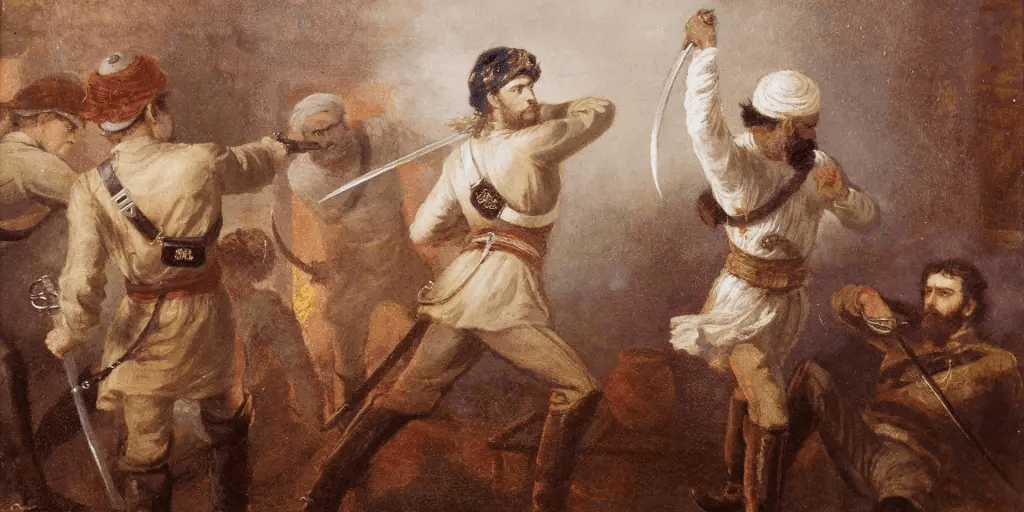
Already recognised as brilliant cavalry officers, Hodson enlisted the brothers for his Rohtak expedition, Charles leading the Guides and Hugh as a part of Hodson’s Horse. Returning to the Ridge, Charles was almost immediately embroiled in the action on the 18th of August, leading the Guides’ Cavalry in a charge against the mutineers. In the hand-to-hand combat which ensued, Charles killed two mutineers after a prolonged fight, leading to his second citation for a VC.
However, the field was still open for Hugh.
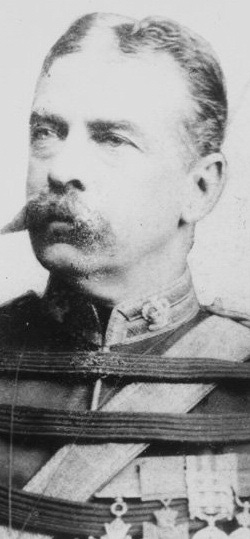
“Lieutenant Gough, when in command of a party of Hodson’s Horse near Alumbagh, on November 12, 1857, particularly distinguished himself by his forward bearing in charging across a swamp and capturing two guns, although defended by a vastly superior body of the enemy.“On this occasion, he had his horse wounded in two places and his turban cut through by sword cuts, whilst engaged in combat with three Sepoys.
Gough also particularly distinguished himself, near Jellalabad, on February 25, 1858, by showing a brilliant example to his regiment. When ordered to charge the enemy’s guns, and by his gallant and forward conduct, he enabled them to effect their object. On this occasion, he engaged himself in a series of single combats, until at length he was disabled by a musket ball through the leg while charging two Sepoys with fixed bayonets. Lieutenant Gough on this day had two horses killed under him, a shot through his helmet, and another through his scabbard, besides being severely wounded.”
However, this is a rather bland telling of a thrilling tale of his first citation, and we fortunately can read it from the man himself. In “Old Memories”, Gough rather downplays the incident, however, it is still best recounted in his own words.
On the 12th of November 1857, the forces under Sir Colin Campbell began their march towards Lucknow, stopping firstly at the Alambagh. No one was expecting there to be any resistance as it was believed that after the trouncing Havelock had given the rebels, and since the position had since September been defended by a small but determined force left there to guard the enclosure, it was surmised any attack would surely come from the side of the city. Suddenly, as the force advanced along the road, the rebels were on their right flank. They were estimated at some 2000 strong with 2 guns. These had been taken out of the Jellalabad Fort for the sole purpose of irritating the advance. Proving troublesome to the extreme, Hope Grant, who was in command, rode up to Gough and requested him to take his men and capture the guns. He also desired Gough to spike them if they could not be removed – Gough was provided with a hammer and spikes, but somewhere along the way, Gough threw these meddlesome objects away!
“With my small body of men, my only chance of success was by making a flank attack, and if possible a surprise. With this object, I made a considerable detour and managed, undercover of some fields
of growing corn or sugar-cane, to arrive on the left flank of the enemy perfectly unseen. The guns were posted on a small mound, and a considerable body of the enemy had an admirable position in rear of this mound, in front of and amidst some trees and scrub. Between us and them lay a marshy jheel, with long, reedy grass—an unpleasant obstacle, but which served admirably to cover our movements. I then advanced my men through this jheel and long grass at a trot, and so concealed our movements till we got clear when I gave the words ” Form line ” and ” Charge.” My men gave a ringing cheer, and we were into the masses. he surprise was complete, and owing to its suddenness, they had no conception of our numbers, and so the shock to them and victory to us was as if it had been a whole brigade. My charger, “Tearaway,” the horse left me in poor Phillips’ will, carried me like a bird, and I found myself well ahead. It seemed like cutting one’s way through a field of corn, and I had to make a lane for myself as I rode along. The men followed me splendidly, and in a very short time, the affair was over—the guns were captured, the enemy scattered, and the fight became a pursuit. Our loss was very trifling, as is often the case in a sudden surprise, but we cut up numbers of the enemy and should have accounted for more but for the nature of the ground. I came out of the fight untouched, and this I attribute to the pace I went; but my good horse “Tearaway” suffered, having a sabre slash over his quarter and another sabre – wound on his foreleg, while my coat-skirt was cut clean through, and the puggeree which, wound round a forage-cap, had been my solehead-dress during the past months, was cut almost to the last fold, but by its thickness undoubtedly saved my head…
“Sir Colin Campbell had just ridden up to the front as the affair took place and witnessed the charge. I was very proud, both for my men and myself, when a little later he sent for me, and, complimenting
me highly said he should be glad to promote any man I would recommend for conspicuous gallantry.
Sir Colin Campbell afterwards made particular mention of my name in his despatches, thereby gaining for me the honoured and most-coveted distinction of the Victoria Cross.”
The second citation occurred on Campbell’s return to Lucknow the following year, in 1858. At the time, Gough was no longer leading Hodson’s Horse – Stephen Raikes Hodson had joined the column and was squarely in charge. The affair as it was, was a mess. The rebels had amassed close to the fort and consisted mostly of infantry – the approach of the cavalry seemed to have turned their heads, for they neither charged nor rallied, and at the advance of Hodson’s Horse, they fairly ran. However, the day was not quite over. In the “ardour of the charge and pursuit” the regiment got out of hand, lost their formation and scattered, giving the rebels the perfect opportunity to rally around their remaining gun (the other had been captured in the charge) and began pouring volleys of musketry and discharges of grape straight into the cavalry. The men, though brave in pursuit and charge, “could not stand being hammered at a disadvantage”, and while the officers shouted themselves hoarse, it looked like Hodson’s Horse would flee. Hodson managed to gather a dozen of them together and shouted for the men to follow him as he tried to start the charge. As he advanced with Gough at his side, a shot took down Hodson’s horse and then Gough’s dear charger, Tearaway “reared straight up and fell dead.” With Hodson foundering on the ground with his dead horse and Gough scrambling about trying to get another horse, the firing was immense and at very short range so that almost every man of the small party was soon either wounded or dead. Gough luckily grabbed hold of a “small grey country mare” whose rider had just been killed, and, leaping onto the animal’s back, he continued onwards. Luck was on his side – the 7th Hussars and the Military Train now came on and charged the remaining gun, scattering the rebels.
Gough fell into the pursuit – the rebels had managed to get themselves under the cover of low scrub and trees, and as they were guarded by a village, it was soon seen that cavalry was useless. However, in his ardour, Gough managed to get ahead of his men, when I came upon a couple of sepoys on their way to the village. They had their bayonets fixed and, seeing me unsupported, stood one in my direct front and the other on my right. I made for the former, but the one on the right took aim at me as I passed and shot me clean through the thigh, the bullet going through my saddle and my horse, killing her dead. Fortunately, I fell clear, though helpless. My opponent was just coming up to finish me off when he was sabred by a trooper of the Military Train.”
Gough would remain hors de combat for some time, but he remained with his regiment. His wound eventually healed, and while he was convalescing, he received the news that he had been gazetted to the Victoria Cross. In the next Gazette, he saw his brother’s name. Hugh Gough was offered an appointment as second in command of the 2nd Marhatta Horse, soon to be raised by Major F.H. Smith and off he went for the next round of war and carnage. At the time of winning his VC, Lieutenant Hugh Gough was 23 years old.
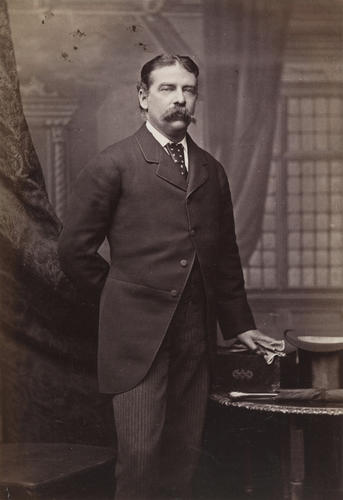
Born in Calcutta in 1833, the third son of Judge George Gough and Charlotte Margaret (née Becher) and grandson of Viscount Gough, Hugh was commissioned as a cornet in the 3rd Bengal Light Cavalry In September 1853 at just 19; during the mutiny, he served with the 1st Bengal European Light Cavalry (raised in 1857 and renamed the 19th Hussars in 1862) and as adjutant of Hodson’s Horse. In 1868, he served as commandant of the 12th Bengal Cavalry in the Abyssinian Campaign. He commanded the Cavalry Brigade on their march from Kabul to Kandahar during the 2nd Afghan War. In 1894, he was promoted to general. He served as Keeper of the Crown Jewels from 1898 to 1904 and finished his career as Lieutenant-Governor of the Channel Islands. General Sir Hugh Gough died in 1909 in St. Thomas’ Tower on the 12th of May.
The final man to feature in this gallant band is
Lieutenant John Watson, 1st Punjab Cavalry
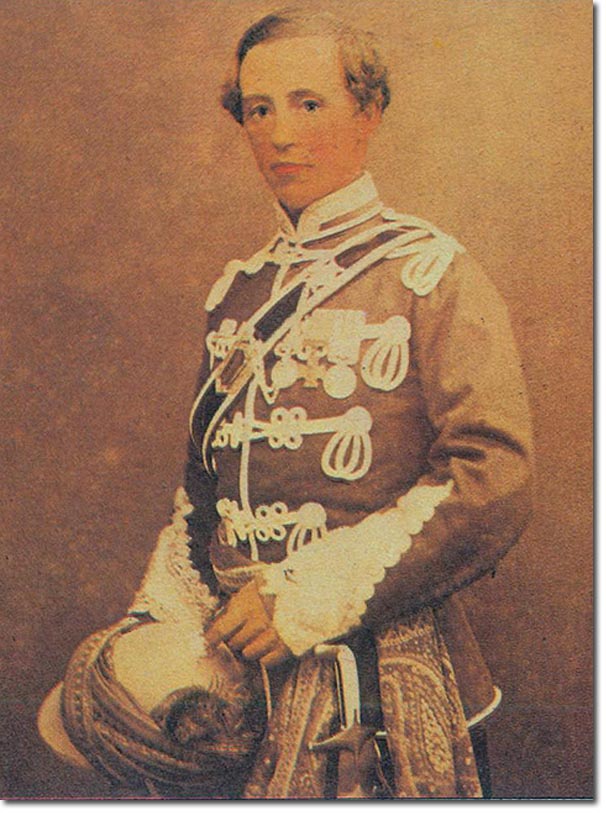
The son of George Watson of Chigwell, Essex, John was born on the 6th of September, 1829. In 1848, at just 19 years old, he travelled to London with the sole intention of joining the EICo army. He signed up for the Bengal Army only to find himself kicking up his heels in Madras, and he quickly transferred to the gents of the Bombay Fusiliers in 1848. He was on his way to serve in the 2nd Sikh War. Not content with his lot, Watson made two short-lived transfers to other Bombay Infantry regiments, but his career only began to soar when he joined as a cavalryman in the 1st Punjab Cavalry. Regarded as one of the most promising young officers of the Punjab Frontier Force, it would not be long before he was on his way to making his name.
He served and fought his way through the Siege of Delhi, and it was with no surprise he was called upon to serve with the Delhi Column – during the Battle of Agra, he captured one gun. Then, as the rebels were driven out of La Martiniere on the 14th of November, Lieutenant Roberts recalled,
“Entirely alone he attacked the enemy’s Cavalry, and was at once engaged with its leader and six of the front men; he fought gallantly, but the unequal contest could not have lasted much longer had not Probyn, who, with his own and Watson’s squadrons, was only about 300 yards off, become aware of his comrade’s critical position, and dashed to his assistance. For this and gallantry on many other occasions, Hope Grant recommended Watson for the Victoria Cross.”
Chasing the rebels out of the Martiniere and as far as the canal, Watson was far ahead of the charge. Realising if he turned, his men would most likely misunderstand his movement and turn back, he dashed on, alone. Within a few minutes, he was engaged with the leader, Rissaldar and as many as seven front men. The Rissaldar raised his pistol and shot, but he missed his mark, leaving Watson open to run him through with his sabre. Dismounted, the Rissaldar drew his tulwar. while the remainder of the men stood their ground and rapidly surrounded Watson. Fortunately, and not far behind, was Dighton Probyn with his and Watson’s squadrons. They swiftly entered the fight, and the rebels rapidly withdrew.
It was a hard day’s work for John Watson. He returned to camp bruised and bleeding, with a blow to the head from a tulwar (the habit of wearing a rather cumbersome head covering saved him from being cut in two), a slice out of his left arm which severed his chain gauntlet glove and another cut on the right arm which only divided the sleeve of his jacket but disabled his arm for some time nevertheless, while a bullet passed harmlessly through his coat while a blow to the leg left him lame for a few days to follow. These would not be his only injuries, but he rose in the estimation of his men with each fight.
“During one of Watson’s many reconnaissances, he rceived a cut on the face from a sabre. One of the 2nd Punjah Cavalryman, seeing what had happened, rushed to Probyn and said: ‘ Watson sahib has got a wound which is worth a lakh of rupees!’ (Roberts)
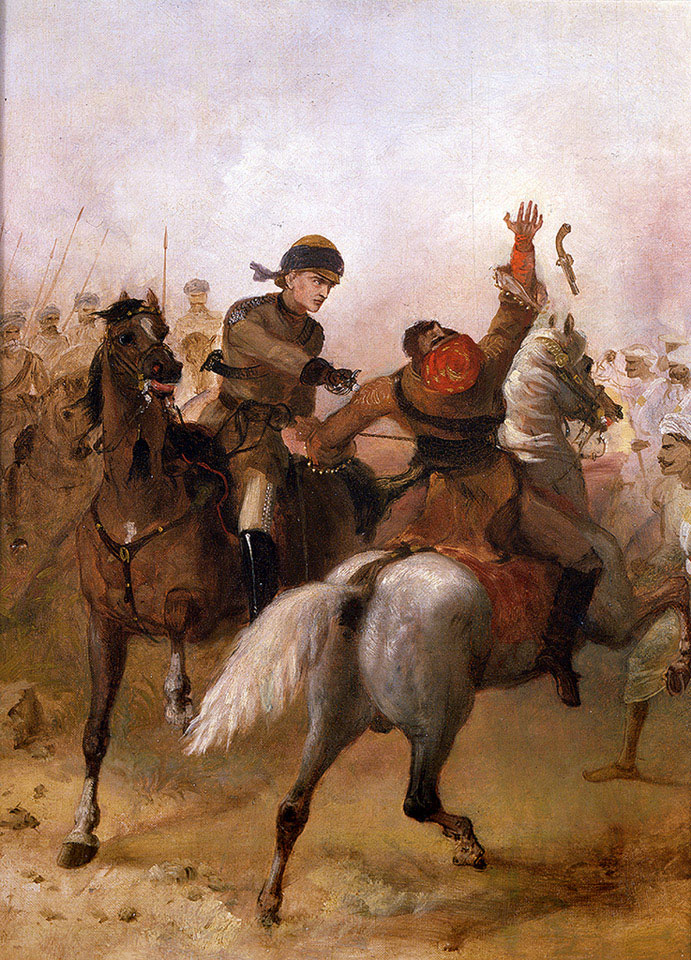
Following the Relief of Lucknow, 28-year-old John Watson returned to England briefly on sick leave, but in 1858, he returned to India and raised the 4th Sikh Irregular Cavalry, which later became known as 6th Duke of Connaught’s Own Lancers (Watson’s Horse). In 1863, he took part in the Umbeyla Expedition and in 1871, he commanded the Central India Horse. Then his career, for a moment, turned political when he became Resident at Gwalior in 1877. To list all of John Watson’s appointments is somewhat complicated, but it is worth seeing that he was more than just a promising young officer.
1870-1871 – Aide-de-Camp to Her Majesty Empress Victoria
1871 – Officiating Adjutant-General in Central India
1877 – Resident at Gwalior
1878 – Commanded the Cavalry despatched from Bombay to Malta
1879-1880 – Commanded the Punjab chief’s contingent of the Kurram Valley Field Force in the Second Afghan War
1882-1886 – He was an Agent to the Governor-General at Baroda. For this, he was subsequently knighted as Knight Commander of the Order of the Bath in 1886.
He retired as a full general in 1891.
In 1902, he was promoted to Knight Grand of Cross in the Coronation Honours List published on 26th June of that year and was invested in August by King Edward VII.
In 1904, at the age of 75, John Watson was made Colonel of the Regiment of the 13th Duke of Connaught Lancers.
His neighbour in Finchhampstead, Berkshire, where Watson chose to spend his retirement, was none other than Lieutenant-Colonel Alfred Stowell Jones; to make their bond just that more complete, Jones’ daughter married Watson’s son. Sir John Watson died on the 23rd of January 1919.
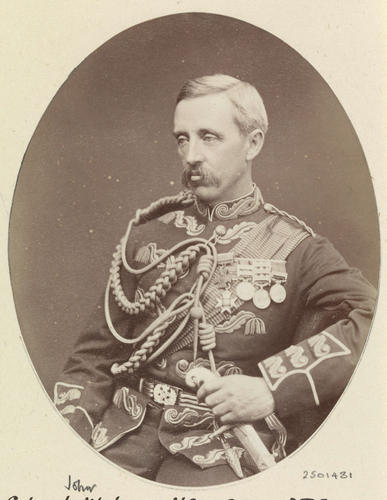
So end the VCs won from June 1857 until the 14th of November in the Delhi, Agra and Oudh fields. There are other men whose battles we have yet to recount and whose VCs are no less hard-won, but we shall now turn our attention to the sabres, shot, shell and the fight of the 16th of November, a day that would bring a veritable harvest of death on a city and Victoria Crosses to 24 men. The arena is Lucknow, and Sir Colin Campbell is ready to advance.
Sources:
Anson, O. H. S. G. With H.M. 9th Lancers during the Indian Mutiny: The Letters of Brevet-Major O.H.S.G. Anson. Edited by Harcourt S. Anson. London: W. H. Allen & Co., 1896.
Bourchier, George. Eight Months Campaign against the Bengal Sepoy Army during the Mutiny of 1857. London: Smith, Elder, and Co., 1858.
Gough, Hugh. Old Memories. Edinburgh: William Blackwood and Sons, 1898.
Grant, Hope. Incidents in the Sepoy War, 1857-58: Compiled from the Private Journals of General Sir Hope Grant. Edited by Henry Knollys. Edinburgh: William Blackwood and Sons, 1873.
Hartigan, Henry. Stray Leaves from a Military Man’s Notebook, Containing Descriptions of Men and Things Regimental at Home and Abroad. Edited by N. T. Walker. Calcutta: [n.p.], 1877. (Note: “n.p.” indicates no publisher is listed on the original historical title page).
Knollys, William Wallingford. The Victoria Cross in India. London: Dean & Son, 1886.
Roberts, Frederick Sleigh. Forty-One Years in India: From Subaltern to Commander-in-Chief. London: Richard Bentley & Son, 1897.
Stewart, Rupert. The Book of the Victoria Cross. London: Hugh Rees, Ltd., 1916.
Wilkins, Philip Aveling. The History of the Victoria Cross: Being an Account of the 520 Acts of Bravery for which the Decoration Has Been Awarded, and Portraits of 392 Recipients. London: Archibald Constable & Co., 1904.
Online Sources:
https://vcgca.org/
https://www.nam.ac.uk/
https://www.memorialstovalour.co.uk/
https://victoriacrossonline.co.uk/
https://theroyallancers.org/history/9th-lancers-history/
https://royallancersmuseum.co.uk/archive/journals/regimental-histories/regimental-histories-1715-1936-sheppard/39184?q=1857
https://theroyallancers.org/history/9th-lancers-history/
There is more on the Goughs but as only Charles and Hugh appear in the Indian Mutiny, readers may avail themselves of https://www.keymilitary.com/article/keeping-it-family
 Mutiny Reflections